
Faith-Based Daily Awareness Post 28 January 2026
Faith-Based Security Headlines
These updates are shared to help raise the situational awareness of Faith-Based organizations to best defend against and mitigate the impacts from all-hazards threats including physical security, cybersecurity, and natural disasters.
Over 800 severe antisemitic incidents in 2025, 21 Jews murdered
A new interim report from Israel’s Ministry of Diaspora Affairs and Combating Antisemitism shows a dramatic increase in violent antisemitic incidents worldwide in 2025, with 815 severe incidents recorded and 21 Jews murdered, up sharply from just one confirmed death in 2024. The report also documented 124 million antisemitic posts on X/Twitter and more than 4,000 anti-Israel demonstrations, including 365 labeled as high-risk to Jewish communities. Most incidents occurred in the U.S., U.K., France, Australia, and Canada, and officials linked rises in violence to broader international security developments. Beyond physical attacks, the ministry flagged the spread of fake news and manipulated content online as fueling hatred and delegitimization of Jews and Israel. Minister Amichai Chikli and President Itzhak Herzog emphasized global cooperation and action against antisemitism, framing it as a threat to democratic societies at large.
Analyst Comments: The report highlights not only the scale but the evolving nature of antisemitism from physical violence to widespread online hate and misinformation. The dramatic jump in fatalities, from one in 2024 to 21 in 2025, signals a troubling escalation that may reflect broader geopolitical tensions and polarizing public discourse. The emphasis on social media activity and anti-Israel demonstrations suggests that antisemitism is increasingly interwoven with how global the Israeli-Hamas War are perceived and communicated, particularly on platforms like X/Twitter where moderation is inconsistent. Minister Chikli’s call for moving “from defense to offense” underscores a shift toward proactive monitoring and intervention, but long-term progress will depend on international cooperation and effective responses not just to violent acts but to the information environment that enables them. The focus on major Western countries also points to a need for localized strategies that address not just isolated incidents but the social and political conditions that allow antisemitic sentiment to flourish.
RI: Police: Man stole $10K+ in donations from East Greenwich church
Police in East Greenwich, Rhode Island, have arrested Stephen Gadbois, 31, of Lincoln, in connection with the theft of more than $10,000 in donations from St. Luke’s Episcopal Church. Authorities say checks and cash stored in locked money bags inside a locked office were found missing last August, and keys to the storage were also gone, suggesting the theft was targeted and the individual was personally connected to someone at the church: the individual was identified as the boyfriend of a church administrator, and the administrator told police that she had been at the church with him and that he knew where the funds were stored. That connection is part of why police believe he had prior knowledge of the storage location and keys to the locked office where the checks and cash were kept. Shortly after the disappearance of the funds, bank records indicated Gadbois deposited a $10,019 check payable to the church into his personal account; he later claimed the check was a “gift,” a claim officials dispute. Gadbois is facing two counts of larceny and is due back in court.
Analyst Comments: Theft incidents at houses of worship, such as this case, underscore a recurring vulnerability tied to trust-based environments. Churches and other faith institutions often rely on volunteers, open access, and informal processes that can unintentionally create opportunities for misuse of funds, particularly when internal controls are limited. Allegations involving individuals with access or familiarity with church operations highlight how insider knowledge can play a role in financial crimes, making these incidents especially disruptive to congregational trust and morale. Beyond the financial loss, thefts can strain relationships within faith communities and divert leadership attention away from ministry and outreach. As a result, many houses of worship are increasingly viewing basic financial safeguards and accountability measures not as signs of mistrust, but as necessary stewardship practices that protect both resources and the integrity of the community.
Weekly Security Sprint EP 143 Minneapolis and Winter Weather
The Gate 15 Security Sprint is a weekly rundown of the week’s notable all-hazards security news, risks and threats and some of the key focus areas for organizations to consider behind the headlines. Gate 15 team members discuss physical security, cybersecurity, natural hazards, health threats and other issues across our environment.
In this week’ Weekly Security Sprint Dave and Andy covered the following topics:
- Rules of Engagement: safety, security and resilience considerations after Minneapolis and the murder of Alex Pretti
- Severe Weather Planning & Resilience
- AI-Powered Disinformation Swarms are coming for Democracy
Information on other Gate 15 podcasts can be found at Podcasts (gate15.global).
Building an Intelligence Team for Your House of Worship
When: February 4, 2026, 12:00 PM ET.
Register here.
This session is part of an FB-ISAO–led program, developed and delivered by our team to support faith-based organizations in building stronger threat awareness and intelligence capabilities.
The Mission and Purpose of an Intelligence Team and Program session will explore key questions such as:
- What is the local threat to my house of worship?
- Which threat actors or adversaries might support, plan, or carry out a malicious act in my area?
During the session, FB-ISAO panelists will discuss how broader contextual information—including global developments—can be used to better assess and understand local risks facing houses of worship. The discussion will focus on helping faith-based organizations determine:
- What information they need,
- Where to find that information, and
- How to process it in a meaningful, useful, and actionable way.
More Faith-Based Stories
- “God is with Us:” UCC clergy discuss efforts of resistance in Minnesota
- FL: Port St. Lucie church vandalized after concerning incident during Sunday service
- NY: HATE IN QUEENS: Rebbi Punched in Face in Antisemitic Attack; Suspect Arrested After Shomrim Intervention
- Delaware man accused of stealing air conditioner parts from two churches
- Tracker: 500 Attacks on U.S. Catholic Churches Since May 2020
- The AI Policy Your Church Needs (Before a Crisis Hits)
- Parents Blocked From Their Children During Church Protest
- Man arrested after spraying unknown substance on Rep. Ilhan Omar at Minneapolis town hall
- Federal Authorities Warn of Fraudsters Impersonating Prosecutors and Law Enforcement
- Next ‘No Kings’ march on the horizon with flagship event in the Twin Cities
- [Report] Annual Terrorism Threat Report 2025
- How to prepare for and plan your organisation’s response to severe cyber threat: a guide for CNI
- The Cybersecurity Risks of Agentic AI: What Security Teams Need to Know
- Spring forecast 2026: Wintry weather isn’t finished yet in these parts of the US
- How Does Climate Change Affect Winter Storms?
More Security-Focused Content

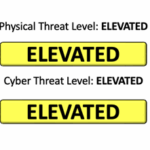

The FB-ISAO’s sponsor Gate 15 publishes a daily newsletter called the SUN. Curated from their open source intelligence collection process, the SUN informs leaders and analysts with the critical news of the day and provides a holistic look at the current global, all-hazards threat environment. Ahead of the daily news cycle, the SUN allows current situational awareness into the topics that will impact your organization.