
Faith-Based Daily Awareness Post 5 March 2026
Faith-Based Security Headlines
These updates are shared to help raise the situational awareness of Faith-Based organizations to best defend against and mitigate the impacts from all-hazards threats including physical security, cybersecurity, and natural disasters.
Cyber Fallout After the Strikes: Signal, Noise and What Comes Next
FortiGuard Labs examines observed and potential cyber activity following recent U.S.–Israeli kinetic strikes on Iranian targets, focusing on whether Iran has launched or will launch coordinated cyber retaliation. As of the report, there is no verified large-scale Iranian cyber offensive directly tied to the strikes, but analysts have observed an increase in regional cyber activity, including website defacements, broadcast intrusions, psychological messaging, and opportunistic intrusion attempts that may be loosely tied to geopolitical tensions rather than organized state retaliation. These actions are largely categorized as psychological operations, hacktivist signaling, or opportunistic exploitation of geopolitical noise, rather than evidence of destructive infrastructure attacks.
FortiGuard notes that past Iranian cyber operations have often been prepared in advance and executed later when defenders have relaxed vigilance, and warns that true, coordinated retaliation could still emerge. The blog outlines historic tactics used in such campaigns such as wiper malware, DDoS attacks, credential harvesting, and spoofed software and emphasizes that geopolitical conflict environments create “noise” that opportunistic attackers frequently exploit for phishing, fake updates, and misinformation. To mitigate risk, organizations are urged to strengthen cyber hygiene practices including situational awareness, multifactor authentication, automated patching, network segmentation, incident response planning, and threat sharing, as well as to prepare for more targeted waves of activity should they develop.
Analyst Comments: The key takeaway is that while there is no confirmed large-scale cyber retaliation currently, periods of geopolitical tension reliably generate increased malicious cyber activity, much of it opportunistic rather than strategic. The “noise” itself creates risk: phishing campaigns, spoofed advisories, fake updates, DDoS attempts, and opportunistic intrusion efforts often spike because attackers know organizations are distracted and more likely to click, download, or misinterpret information.
For organizations, the practical implication is straightforward: this is a moment for vigilance, not a panic moment. Security teams should double down on fundamentals like MFA enforcement, patch management, monitoring for anomalous logins, email filtering, and clear internal communications about misinformation. It is also a good time to validate escalation thresholds and ensure incident response playbooks reflect the potential for cyber activity to evolve into broader operational or reputational disruption.
USCIRF Releases 2026 Annual Report Exposes Egregious Religious Freedom Violations Worldwide
The U.S. Commission on International Religious Freedom (USCIRF) released its 2026 Annual Report documenting religious freedom conditions in 2025. Highlights from the report include arrests of members of underground churches in China, mob violence against religious minorities in India and Pakistan, house of worship bombings in Burma, and education restrictions in Tajikistan.
USCIRF emphasizes that unjust laws, discrimination, harassment, and violence continue to deny fundamental religious freedoms in many nations and calls on the U.S. government to maintain FoRB as a central element of foreign policy. For 2026, the commission recommends 18 countries for designation as Countries of Particular Concern (CPCs), 11 countries for the Special Watch List, and seven entities for Entities of Particular Concern (EPCs), along with broader policy recommendations to the President, Secretary of State, and Congress to advance religious freedom worldwide.
Analyst Comments: The 2026 USCIRF Annual Report serves not only as a human rights assessment but also as an important policy signal and risk indicator for organizations operating internationally. Countries recommended for CPC or Special Watch List designation often experience elevated governance pressures, social unrest, and heightened scrutiny from the international community.
For faith-based organizations, NGOs, multinational companies, and institutions with global partnerships, these designations can signal an increased likelihood of protest activity, targeted violence against religious communities, regulatory unpredictability, or reputational exposure. In this context, organizations with personnel, operations, or supply chains in affected regions should consider reassessing security and duty-of-care protocols, crisis communication plans, and monitoring mechanisms.
More Faith-Based Stories
- CA: Suspect In SF Church Vandalism Urged Beheading Of Jewish, Gay Children: DA
- Two Argentine Jewish Tourists Assaulted in Milan as Antisemitic Incidents Surge in Italy
- NY: Hateful attacker spews anti-Jewish comments, pummels man and grabs yarmulke on NYC train: cops
- NC: Arrest made in Garner Capital Church suspicious object investigation; suspect had bomb, warrants show
- Indiana man learns his fate after spray-painting satanic imagery on church
- AR: Hot Springs man arrested after allegedly damaging church property
- Soft Targets: US Churches and Rising Threats
- Preoperational Surveillance Tactics
- Starting the Conversation: Bringing Congregational Security to the Council Table
- Court Allows Subpoena of Archdiocese of Seattle in Abuse Investigation
- Catholic diocese of Providence covered up children’s abuse for over 75 years: AG report
- Iran vows US will bitterly regret attack on warship, targets more countries
- PA: Harrison County Man Indicted on Charges of Threatening the President and ICE
- New NSA guidance on zero trust principles pushes enforcement
- Central US braces for days of severe weather, tornado threats with outbreak risk next week
More Security-Focused Content

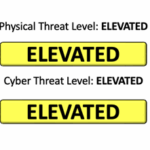
The FB-ISAO’s sponsor Gate 15 publishes a daily newsletter called the SUN. Curated from their open source intelligence collection process, the SUN informs leaders and analysts with the critical news of the day and provides a holistic look at the current global, all-hazards threat environment. Ahead of the daily news cycle, the SUN allows current situational awareness into the topics that will impact your organization.