
Faith-Based Daily Awareness Post 12 November 2025
Faith-Based Security Headlines
These updates are shared to help raise the situational awareness of Faith-Based organizations to best defend against and mitigate the impacts from all-hazards threats including physical security, cybersecurity, and natural disasters.
The State of Behavioral Threat Assessment and Management in K–12 Public Schools
The National Threat Assessment Center (NTAC) has released a new report on the current landscape of behavior threat assessment and management (BTAM) in K-12 schools. The new publication illuminates how schools are implementing BTAM to support school safety. The study presents findings from a nationally representative survey of over 1,700 school leaders implementing and using BTAM at their schools as part of their violence prevention efforts. This study delivers a groundbreaking assessment of BTAM implementation and provides the most comprehensive picture on the current state of BTAM in K-12 public schools across the United States. It further identifies opportunities for future focus and potential solutions to enhance BTAM implementation. The results are the first of their kind and offer critical insights into how schools are implementing BTAM to support student safety and well-being.
Analyst Comments: The NTAC report represents a pivotal moment in how institutions nationwide are working to prevent targeted violence. By surveying more than 1,700 school leaders, NTAC provides a data-driven look at the strengths and gaps in implementing BTAM such as variations in training, staffing, and integration with mental health and law enforcement partners that can inform national policy and community-level strategies.
For faith-based organizations, this report carries meaningful parallels and lessons. Many churches, synagogues, mosques, and affiliated schools face similar concerns about insider threats, behavioral warning signs, and balancing safety with compassion. BTAM’s multidisciplinary, prevention-focused approach aligns closely with the mission of faith communities to provide care, support, and intervention before crises escalate. The NTAC report ultimately reinforces that prevention depends on strong communication, consistent protocols, and a culture of trust values central to both public schools and faith-based communities seeking to safeguard their members and nurture resilience.
Severe solar storms could hit Earth and trigger auroras, space forecasters say
A series of strong solar storms driven by multiple coronal mass ejections (CMEs) from the sun has prompted space-weather forecasters to issue a warning that the Auora Borealis (northern lights) may become visible in part of the United States much farther south than normal. The storms have already reached a severe level, and at least one more CME is expected to arrive, which could further intensify the display. Because the sun is in a more active phase of its 11-year cycle, aurora-watchers are being advised to watch the skies, particularly from dark, rural areas and during late evening to early morning hours. At the same time, the heightened geomagnetic activity carries the potential for disruptions to radio signals, GPS navigation and power grid systems, so meteorologists and space weather agencies are also monitoring for possible impacts.
Analyst Comments: The strong solar storms causing this week’s aurora activity are tied to a surge in solar eruptions as the sun nears the peak of its 11-year cycle, meaning similar events could continue throughout the year. Forecasters from NOAA’s Space Weather Prediction Center note that while the geomagnetic storm is classified as severe, the actual visibility and brightness of the northern lights depend heavily on when the solar plasma reaches Earth and how it interacts with the planet’s magnetic field. This uncertainty means that while auroras may appear farther south than usual potentially across much of the continental United States the display could vary widely by region. Warning that these same conditions can temporarily disrupt satellite operations, radio signals, GPS navigation, and power grids, so space-weather agencies are closely monitoring for potential effects. Despite the risks, scientists emphasize that this is an exceptional viewing opportunity; those hoping to catch the display should head to dark, rural areas between 10 p.m. and 2 a.m., when skies are clearest and light pollution is minimal.
Friday’s FB-ISAO Case Study: Learn How Intelligence Can Inform Your Organizational Resilience
The FB-ISAO recording for the Case Study presented by one of our members has been shared to Slack in #fb-isao_recordings. Please note this session is TLP: AMBER+STRICT which restricts sharing of the materials to your organization only.
Nerd Out EP 64. Keep the relationships warm. Holiday and winter weather preparedness.
The Gate 15 Nerd Out! Security Panel Discussion, moderated by Dave Pounder, focuses on physical security topics including terrorism, extremism, hostile events, and other pertinent topics.
In this Nerd Out Dave and Alec are joined by Joe Levy, who talks about his role and the day to day of managing a venue. Then the group talks about outdoor venue security and other preparedness activities incorporating drone threat and building lasting partnerships. The gang then talked about winter weather preparedness before wrapping up their security talk with a look back to the recent elections and a look ahead to 2026.
Information on other Gate 15 podcasts can be found at Podcasts (gate15.global).
More Faith-Based Stories
- ‘Gonna look like a genocide’: Palm Beach Gardens man accused of mass shooting threat toward Christ Fellowship
- Texas man charged with making antisemitic death threats to Jewish conservative pundits
- 1 injured after vacant Detroit church catches fire
- Fort Myers shooting near church leaves community shaken, suspect caught
- Milwaukee Synagogue for Russian Jews reports vandalism to large menorah
- What I Saw And Heard In Washington
- 20 injured after bus carrying teens returning from church camp overturns on winding SoCal road
- Families of girls and counselors who died in Texas floods allege negligence by Camp Mystic
- Pastor John Kliewer leaves Duluth Vineyard, wife claims church’s defamation gave husband PTSD
- Meet chatbot Jesus: Churches tap AI to save souls — and time
- Toronto police seek suspect in antisemitic assault on Jewish man
- Cyber information sharing law would get extension under shutdown deal bill
- Justice Department to investigate UC Berkeley after protesters try to disrupt Turning Point USA campus event
- Convicted Oath Keepers’ founder announces militia’s relaunch to enforce Trump orders
- Kash Patel’s ‘Effin Wild’ Ride as FBI Director
- DOD: Secretary of War Announces Acquisition Reform
- Global Cyber Attacks Surge in October 2025 Amid Explosive Ransomware Growth and Rising GenAI Threats
- Why a lot of people are getting hacked with government spyware
- 5 reasons why attackers are phishing over LinkedIn
- Exclusive: UK suspends some intelligence sharing with US over boat strike concerns in major break
More Security-Focused Content

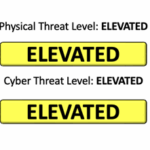
The FB-ISAO’s sponsor Gate 15 publishes a daily newsletter called the SUN. Curated from their open source intelligence collection process, the SUN informs leaders and analysts with the critical news of the day and provides a holistic look at the current global, all-hazards threat environment. Ahead of the daily news cycle, the SUN allows current situational awareness into the topics that will impact your organization.