
Faith-Based Daily Awareness Post 15 January 2026
Faith-Based Security Headlines
These updates are shared to help raise the situational awareness of Faith-Based organizations to best defend against and mitigate the impacts from all-hazards threats including physical security, cybersecurity, and natural disasters.
How AI is Becoming the Next Insider Threat in 2026
Proofpoint’s “AI: The Next Insider Threat – Turning Point for Insider Risk” explains how artificial intelligence is fundamentally transforming insider threat landscapes in 2026 by amplifying both unintended and intentional risks within organizations. AI tools such as large language models and autonomous agents expand what insiders can access and how they behave, increasing the likelihood of accidental data exposure, malicious misuse, and exploitation of system privileges. Traditional insider threat detection focused on human behavior and file-centric controls is no longer sufficient; instead, organizations must unify behavioral, identity, and technical signals to detect early warning indicators, as AI can redefine insider actions and even act autonomously with access. The piece predicts that insider incidents will rise during times of organizational change, and emphasizes that stronger cross-functional governance, ethical guardrails, and policies for safe AI adoption across HR, Legal, and security teams will be required
Analyst Comments: AI significantly expands insider risk vectors by lowering technical barriers and enabling both malicious insiders and external threat actors to misuse trusted access, credentials, or AI-enabled tools. For faith-based institutions in particular, these risks are amplified by typically smaller IT and cybersecurity teams, limited monitoring capabilities, and reliance on trust-based operational models. Volunteers and staff often hold broad or overlapping access to email systems, donation platforms, and member data, increasing the potential impact of compromised credentials or misuse of AI tools. Weak or inconsistent authentication practices such as shared accounts or limited multi-factor authentication further compound this risk.
Recent incidents involving AI-generated impersonation of pastors requesting money from congregants underscore how AI can blur the line between insider and outsider threats by exploiting trusted identities rather than breaching systems. As AI tools become more accessible, faith-based organizations should consider viewing insider risk not solely as a technical issue, but as a human-layer challenge requiring stronger authentication controls, clearer governance, and awareness training to preserve trust while reducing exposure to AI-enabled misuse.
Verizon Outage Knocks Out US Mobile Service, Including Some 911 Calls
On January 14, 2026, Verizon Communications experienced a widespread mobile network outage across the United States, disrupting voice calls, text messaging, and mobile data services for many customers for roughly 10 hours beginning around midday. During the outage, many users’ phones showed “SOS” or emergency-only status, and numerous local officials warned that 911 emergency calls from Verizon devices might not connect reliably, advising people to use landlines or alternative carriers if possible. Although competitors AT&T and T-Mobile said their networks were operating normally, calls attempted to Verizon numbers and cross-carrier routing were widely affected. Verizon engineers worked through the afternoon and evening to restore service, which was largely resolved by around 10:20 p.m. ET, and the company later offered account credits and issued apologies to affected customers. The cause has not been definitively disclosed, but reports point to a software or network configuration issue rather than a cyberattack, and regulators like the FCC are reviewing the incident given its impact on critical communications infrastructure.
Analyst Comments: While this incident does not have a direct nexus to faith-based organizations, it serves as a useful reminder that communications resilience is a critical preparedness consideration even for small and low-risk organizations. Faith-based institutions often rely heavily on mobile phones for day-to-day coordination, emergency notifications, and incident response, particularly during services or community events. Network outages are more commonly associated with natural disasters but, as demonstrated yesterday, are also possible due to technical failures disrupting an organization’s ability to contact emergency services, staff, or congregants. As such, organizations should consider backup communication options, such as landlines, alternative carriers, messaging platforms that function over Wi-Fi, or pre-established in-person coordination plans. Incorporating redundant communication methods into emergency planning helps ensure continuity of operations and safety even when primary cellular networks are unavailable.
Faith-Based ISAO Newsletter v8, Issue 1
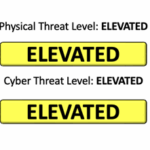
The FB-ISAO Monthly Newsletter for January 2026 (Volume 8, Issue 1, TLP: CLEAR) reports that both the physical and cyber threat levels for U.S. faith-based organizations remain ELEVATED, meaning there is no specific imminent threat identified, but conditions indicate a higher-than-normal likelihood of incidents. A key focus of this issue is the growing risk of AI-enabled deepfake impersonation scams, where attackers use publicly available sermons and online media to convincingly clone pastors’ voices to solicit fraudulent donations, exploiting trust rather than technical vulnerabilities and creating both financial and reputational risks for faith communities. The newsletter also highlights security considerations for religious events held in public spaces, drawing lessons from the Bondi Beach attack in Sydney and emphasizing how open, recreational venues lack controlled perimeters, complicate situational awareness, and limit traditional security measures, requiring tailored planning and close coordination with local authorities. Finally, the newsletter encourages members to engage with the FB-ISAO Slack community, which supports collaboration, information sharing, and access to analytical resources to strengthen resilience across houses of worship in 2026.
More Faith-Based Stories
- Two Texas churches receive bomb threat over the weekend
- Man wanted for Melbourne synagogue firebombing arrested in Iraq, Australian police say
- Facebook commenter arrested after threats involving machine guns and Hanukkah
- Police probe racist vandalism found inside Mount Dora church preschool
- Troy man charged with hate crime for allegedly threatening Jewish man
- Large fire at vacant North Hills church reignites the next morning
- FFY2025 Nonprofit Security Grant Program Application
- Religious groups in Maine push for bill to boost security at houses of worship
More Security-Focused Content


The FB-ISAO’s sponsor Gate 15 publishes a daily newsletter called the SUN. Curated from their open source intelligence collection process, the SUN informs leaders and analysts with the critical news of the day and provides a holistic look at the current global, all-hazards threat environment. Ahead of the daily news cycle, the SUN allows current situational awareness into the topics that will impact your organization.