
Faith-Based Daily Awareness Post 27 October 2025
Faith-Based Security Headlines
These updates are shared to help raise the situational awareness of Faith-Based organizations to best defend against and mitigate the impacts from all-hazards threats including physical security, cybersecurity, and natural disasters.
UK Pledges £10 Million to Protect Muslim Communities After Mosque Attack
On October 23, 2025, UK Prime Minister Keir Starmer announced an additional £10 million in security funding to protect Muslim communities and places of worship across Britain. This pledge follows a suspected arson attack on the Peacehaven Mosque in East Sussex earlier this month, which police are treating as a hate crime.The funding will enhance security at mosques and Muslim community centres through measures such as CCTV systems, alarms, secure fencing, and trained security staff. It builds on the £29.4 million already allocated this year under the Protective Security for Mosques Scheme.
Prime Minister Starmer described Britain as a “proud and tolerant country,” stressing that attacks on any faith community are “attacks on the nation’s values.” Home Secretary Shabana Mahmood condemned the mosque attack as an “appalling crime,” affirming the government’s duty to safeguard freedom of worship and unity against hate.
Recent government data shows anti-Muslim hate crimes rose by 19% in the year ending March 2025, with Muslims accounting for 44% of all religiously motivated offences. Muslim organizations, including the British Muslim Trust and the Muslim Council of Britain, welcomed the funding but urged the government to address the underlying causes of Islamophobia. They emphasized that safety, respect, and equal protection are essential for fostering genuine social cohesion.
Analyst Comments: The UK government’s £10 million pledge to bolster mosque and Muslim community security is a proactive step in response to a rising trend of anti-Muslim hate crimes. This can be viewed as both a symbolic and practical measure: symbolically, it signals that the state recognizes religious hate as a serious societal issue; practically, it provides tangible protections through enhanced surveillance, alarms, and trained security personnel. The increase in anti-Muslim crimes by 19% in the past year underscores the urgency of such measures, yet analysts may note that monitoring outcomes and evaluating whether the funding translates into measurable reductions in attacks will be critical. Furthermore, collaboration with Muslim organizations, as highlighted in their response, is essential to ensure that protective measures are culturally appropriate and effectively targeted.
New AI Video Generators Produce Antisemitic and Hateful Content at Least 40% of the Time, ADL Research Shows
The ADL’s Center on Technology & Society has found that text-to-video AI generators produce antisemitic, extremist, or otherwise hateful content in roughly 40 % of prompts designed to test them. The investigation involved feeding these systems deliberate prompts invoking antisemitic tropes, Holocaust-denial themes, and violent imagery targeting Jewish people; in many cases the models generated disturbing content instead of refusing or deferring to moderation. The ADL warns this is especially worrying because video content combines visuals, audio and narrative, making it far more potent and shareable than text-only content, and thus more easily weaponized by extremist actors. The organization is calling for immediate action: stronger guardrails on generative video systems, increased funding for moderation and detection research, transparency from developers about training data and safeguards, and regulatory oversight to assure these tools don’t amplify hate.
Analyst Comments: ADL’s findings found that nearly 40% of prompts fed into AI text-to-video generators produced antisemitic or hateful content. This rate of failure suggests systemic weaknesses in content moderation and training safeguards across major platforms. The findings strengthen calls for mandatory transparency in training data, independent algorithmic audits, and proactive moderation rather than reactive takedowns.
Melissa becomes third Category 5 hurricane of the extraordinary 2025 season
Hurricane Melissa became the third Category 5 hurricane of the 2025 Atlantic season a rarity only previously matched in 2005. On the morning of October 27th, it was located about 135 miles southwest of Kingston, Jamaica with maximum sustained winds around 160 mph and a central pressure of 913 mb. The storm was moving very slowly westward at only about 3 mph which meant that Jamaica faced an extended period of devastating weather. Forecasts warned of catastrophic impacts in Jamaica and the Caribbean. The forecast shows the system moving westward and then turning north or northeast out of the Caribbean Sea.
Analyst Comments: Hurricane Melissa poses a catastrophic threat to the Caribbean, especially Jamaica, where it is expected to bring life-threatening flash flooding, landslides, and extreme winds as it moves slowly across the region. Experts from the National Hurricane Center (NHC) and meteorologists worldwide emphasize that the storm’s rapid intensification to Category 5 strength has been fueled by unusually warm sea-surface temperatures. Residents in the affected Caribbean nations should prepare and those along the U.S. East Coast should stay alert for secondary impacts like costal swells, rip currents, and heavy rainfall.
More Faith-Based Stories
- Immigration crackdown stokes fear and solidarity at a Catholic church in DC
- San Luis Obispo man accused of hate crime, making bomb threat on social media
- Man arrested in connection with arson at two Casar churches
- Cause of 3Circle Midtown Church fire determined to be electrical
- Santa Ana church leader gets 45 years to life for assaulting three little girls
- House of Worship Security Summit pairs faith leaders with security professionals
- Mossad reveals details of Iranian terror network behind attacks on Jewish sites worldwide
- 12-Year-Old Jewish Boy Brutally Attacked in Vienna, Mother Says School Ignored Pattern of Antisemitic Harassment
- Trump admin. pressured to hold Nigeria accountable for violence against Christians
- Microsoft Releases Out-of-Band Security Update to Mitigate Windows Server Update Service Vulnerability, CVE-2025-59287
- Safeguarding States: Governors Mark Cybersecurity Awareness Month
- Relationships Key to Tennessee’s Whole-of-State Cybersecurity
- DHS Wants a Fleet of AI-Powered Surveillance Trucks
- Storms to bring severe weather, flooding threat from Texas to Louisiana and Arkansas
- Amazon: This week’s AWS outage caused by major DNS failure
More Security-Focused Content

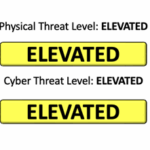
The FB-ISAO’s sponsor Gate 15 publishes a daily newsletter called the SUN. Curated from their open source intelligence collection process, the SUN informs leaders and analysts with the critical news of the day and provides a holistic look at the current global, all-hazards threat environment. Ahead of the daily news cycle, the SUN allows current situational awareness into the topics that will impact your organization.