
Faith-Based Daily Awareness Post 5 August 2026
Faith-Based Security Headlines
These updates are shared to help raise the situational awareness of Faith-Based organizations to best defend against and mitigate the impacts from all-hazards threats including physical security, cybersecurity, and natural disasters.
Maryland synagogue sues county over law restricting concealed carry near houses of worship
Montgomery County, Maryland, enacted an ordinance on July 27, 2026, restricting firearms within 100 yards of places of public assembly, including houses of worship. The law has led to multiple lawsuits from Jewish organizations, congregants, advocacy groups, and the U.S. Department of Justice, with plaintiffs arguing the restriction limits their ability to protect themselves amid rising antisemitic threats. The Silver Spring Jewish Center and Rabbi Menashe Shapiro stated the ordinance leaves vulnerable communities without an important security measure, while the DOJ lawsuit included 11 resident declarations claiming the law “has left us defenseless against armed attackers.” Montgomery County officials defended the measure as a public safety effort, while police stated enforcement would occur through complaints rather than active screening at religious facilities. Many synagogue security volunteers reported continuing to carry firearms despite the ordinance due to ongoing concerns about threats targeting Jewish communities.
Analyst Comments: This case highlights that security planning for houses of worship involves more than addressing physical threats and must also account for changing legal, regulatory, and operational considerations. Faith-based organizations that use trained volunteer security teams or rely on armed personnel may need to reassess existing procedures as firearm regulations and court decisions continue to develop.
Regardless of changes to firearm policies, maintaining a comprehensive, layered security approach remains critical. This includes regularly updating security plans, defining security roles and responsibilities, coordinating with law enforcement partners, providing ongoing training, improving emergency communication processes, and conducting exercises to evaluate preparedness. Continued awareness of legislative changes and legal developments will help faith-based organizations adapt their security strategies while maintaining compliance and readiness.
Religious Statues Vandalized in Florida and Illinois
Recent incidents in Volusia County, Florida, and Evanston, Illinois, highlight the targeting of religious statues and symbols as acts of vandalism against faith communities. In Volusia County, a Virgin Mary statue belonging to a local church was found damaged and discarded in a wooded area, with deputies investigating the incident as vandalism. In Evanston, a Buddhist statue was also vandalized. These incidents demonstrate how visible religious symbols, monuments, and displays can become targets for individuals seeking to cause damage, intimidate communities, or express hostility toward a particular faith tradition.
Analyst Comments: These incidents highlight that threats to faith communities extend beyond people and buildings to include symbolic objects with cultural, spiritual, and emotional significance. Religious statues, memorials, and outdoor displays can become targets for individuals seeking to intimidate communities, cause disruption, or express hostility toward a faith tradition.
For faith-based organizations, these incidents emphasize the importance of including exterior religious symbols and property in overall security assessments. A layered security approach that includes evaluating outdoor vulnerabilities, improving lighting, using cameras where appropriate, documenting significant items, establishing reporting procedures, and coordinating with law enforcement can improve preparedness and response.
Weekly Security Sprint EP 169. Water ISAC Review with Chase Snow
The Gate 15 Security Sprint is a weekly rundown of the week’s notable all-hazards security news, risks and threats and some of the key focus areas for organizations to consider behind the headlines. Gate 15 team members discuss physical security, cybersecurity, natural hazards, health threats and other issues across our environment.
In this week’s Weekly Security Sprint Dave and Andy are joined by Chase Snow to talk about the latest cyber incident involving water facilities. They covered various items Crypto security breaches, how organizations recover from cyber-attacks, and much more.
Information on other Gate 15 podcasts can be found at Podcasts (gate15.global).
More Faith-Based Stories
- FL: ‘I hate them’: Woman accused of attacking Jewish man in North Miami Beach Target
- MN: Illinois man gets probation for Peggy Flanagan threats after 2025 Minneapolis Annunciation Church and School shooting
- FL: Lee County church cemetery vandalized
- IN: Crews respond to fire at church building in South Bend
- TN: Knoxville church fire deemed accidental by fire department
- Latter-day Saints serve neighbors as wildfires force widespread evacuations in Spokane, Washington
- Canada: Man, 56, faces mischief charges after rocks allegedly thrown at windows of East York church
- Canada: Saskatoon synagogue vandalized during prayer service
- Spain: Priests who experienced church desecrations firsthand address how best to react
- Nigeria: Fulani Terrorists Abduct Seminarian, 2 Others During Catholic Church Mass in Enugu
- Armed man arrested at Trump’s California golf course ahead of president’s visit
- Frontline Watch: Examining AI-Related Violence, Iran’s Terror Strategy, and Global Counterterrorism Operations
- White House finalizes AI framework behind closed doors
- Threat Briefing Webinar | August 20th 2026 The State of Shadow AI
- AI-enabled email accounts can be an insider threat
- Tech Support Scams: How To Spot Them And Protect Yourself And Your Devices
- Flying object hits plane at German airport after discovery of drone carrying explosive device
More Security-Focused Content

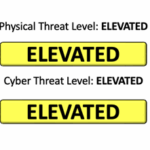

The FB-ISAO’s sponsor Gate 15 publishes a daily newsletter called the SUN. Curated from their open source intelligence collection process, the SUN informs leaders and analysts with the critical news of the day and provides a holistic look at the current global, all-hazards threat environment. Ahead of the daily news cycle, the SUN allows current situational awareness into the topics that will impact your organization.