
Faith-Based Daily Awareness Post 6 November 2026
Faith-Based Security Headlines
These updates are shared to help raise the situational awareness of Faith-Based organizations to best defend against and mitigate the impacts from all-hazards threats including physical security, cybersecurity, and natural disasters.
Report warns of growing threat of deadly attacks on synagogues worldwide
A report by Israel’s Diaspora Affairs and Combating Antisemitism Ministry warns of rising threats to synagogues and Jewish worshipers worldwide, with attackers using firearms, arson, incendiary devices and vehicle-ramming tactics. Covering October 2023 through September 2026, the report highlights attacks on congregants traveling to and from services, with incidents and thwarted plots clustering around Shabbat and Jewish holidays. It documents attacks and threats across Europe, Canada and the United States, where false bomb threats declined but attacks involving lethal weapons increased. The report also raises concerns about suspected terrorist and state-linked actors recruiting local criminals to carry out attacks and calls for governments and law enforcement to strengthen protection of Jewish institutions and hold perpetrators accountable.
Analyst Comments: The reported targeting of worshipers beyond synagogue buildings underscores the need to consider congregant safety during arrival and departure, not just inside the facility. The decline in false bomb threats in the United States should not be interpreted as an overall reduction in risk, given the report’s increase in attacks involving lethal weapons. Security leaders should prioritize:
- Reviewing security measures around service arrival and departure periods.
- Assessing layered physical security against the reported attack methods.
- Practicing emergency response plans with staff and volunteers.
- Tailoring security priorities to local conditions while preserving an open and welcoming environment.
For supporting guidance, see CISA’s Mitigating Attacks on Houses of Worship Security Guide.
Church Leadership in the Age of AI
In a Church Executive interview, Michael Whittle, VP of AI at Subsplash, describes AI’s potential to reduce administrative workloads and help churches devote more time to personal ministry and discipleship. He highlights opportunities to repurpose sermons into resources for use throughout the week, make teaching archives searchable, translate content, automate communications and use participation data to identify people who may need outreach. Whittle argues that these capabilities could make communications and ministry support more accessible to smaller churches with limited staff and budgets.
Whittle also emphasizes that AI should support human relationships and pastoral care. As people increasingly turn to chatbots for spiritual guidance, he sees an opportunity for churches to reinforce the value of in-person, relational discipleship. He cautions leaders against uploading sensitive congregational information, particularly giving data, into AI tools without understanding how it will be handled, stressing that efficiency and personalization must be balanced with protecting members’ privacy and trust.
Analyst Comments: The interview highlights an opportunity to use AI to support ministry rather than substitute for pastoral relationships. For churches with limited resources, the practical test should be whether the tool frees staff to spend more time with congregants while preserving the trust placed in the church. Leaders should prioritize:
- Starting with low-risk tasks using public material, such as repurposing published sermons.
- Establishing clear rules for approved AI tools and the handling of sensitive giving and pastoral information.
- Retaining pastoral oversight of AI-assisted teaching and outreach.
- Reviewing how AI providers use, retain, and protect data before entering member information into any service, rather than assuming a tool is suitable because it is convenient.
For supporting security guidance, see the NCSC’s AI and cyber security guidance.
More Faith-Based Stories
- Muslim group CAIR shutting down in Florida amid ‘terror’ designation
- WI: Quick response limits fire damage at St. Peter’s Church
- PA: Man who set fire to cross outside of Steelton church learns his sentence
- 8th Annual Faith-Based Organizations Safety & Security Seminar Welcomes Hundreds of Leaders from Across Massachusetts
- Canada: Man charged after Meadow Lake church destroyed by fire
- Canada: Three men arrested at makeshift campsite on Guelph church property
- Canada: Ex-secretary of Serbian Orthodox Diocese of Canada charged with fraud after more than $200K redirected: police
- BEL: Brick thrown through Brussels synagogue window
- Jordan: Security officer attacked and killed near Sri Lankan Embassy in Jordan’s capital
- CISA US Government Partners Urge Hardening Industrial Refrigeration and Cold Chain Monitoring Systems
- Department of Defense Expands National Guard Presence in Washington, D.C.
- Department of Justice Launches Super Intelligence Task Force
- Email threat landscape: Q3 2026 trends and insights
- Threat actors use agentic AI tooling to find and abuse exposed secrets
- How is AI changing phishing attacks in 2026?
- US Department of Treasury: Treasury Targets Global Scam Networks and the Corporate Infrastructure That Enables Them
- CERT-EU: From Penetration Testing to Cyber Threat: Beware of ARTEX
More Security-Focused Content

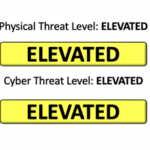
The FB-ISAO’s sponsor Gate 15 publishes a daily newsletter called the SUN. Curated from their open source intelligence collection process, the SUN informs leaders and analysts with the critical news of the day and provides a holistic look at the current global, all-hazards threat environment. Ahead of the daily news cycle, the SUN allows current situational awareness into the topics that will impact your organization.